Critical PHP Flaws Force Sites Offline: What Business Owners Should Do Now
Governments pulled sites offline over two critical PHP flaws. Learn if you’re at risk and how to fix…
Read Article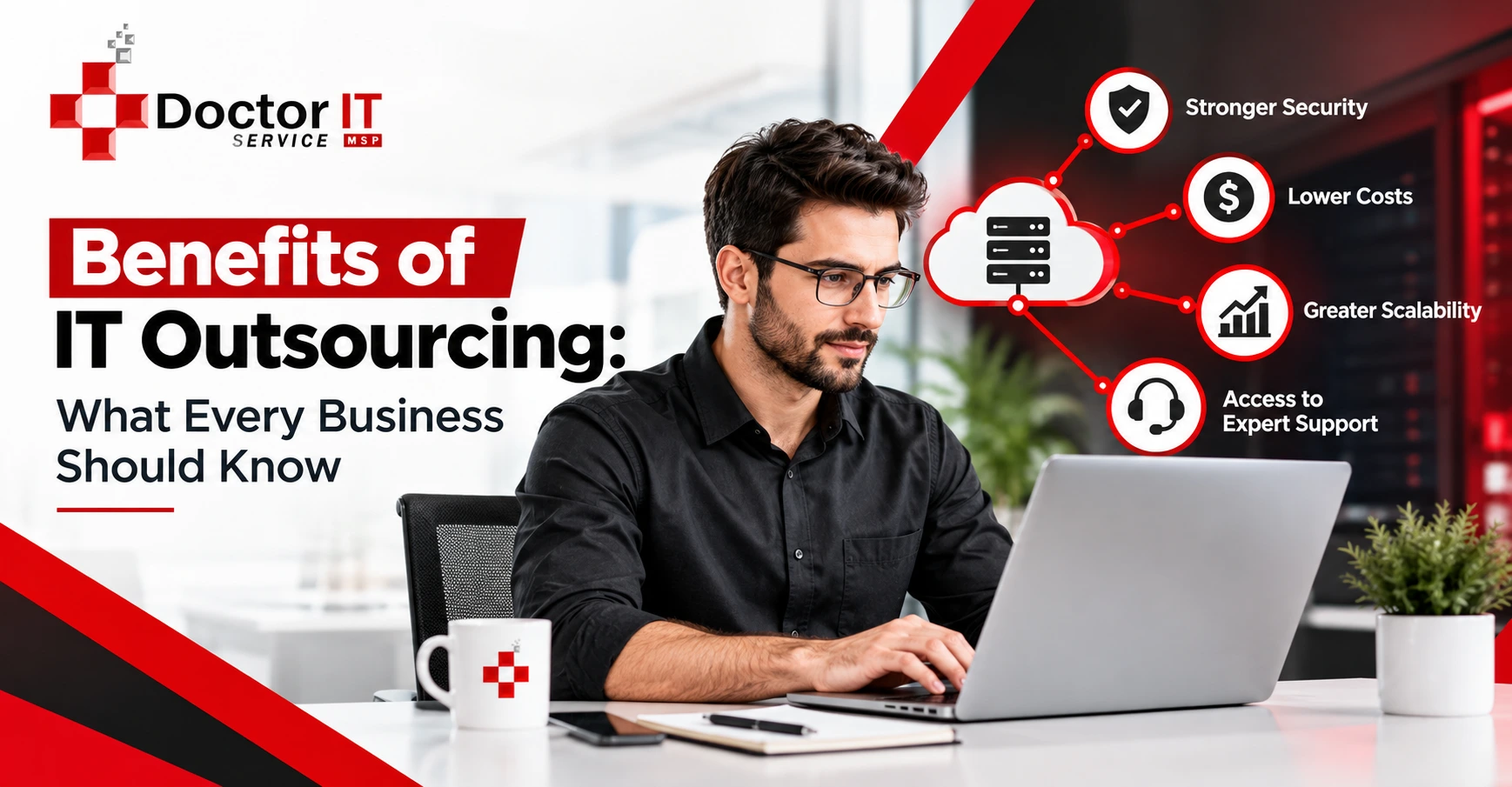
Nobody enjoys watching money disappear into IT costs that never seem to shrink. Salaries, training, the constant hum of overhead. At some point, a lot of business owners start asking the same question: is there a cheaper, easier way to handle this?
For many, the answer turns out to be outsourcing. You hand your IT work, some or all of it, to an outside company that already has the people and tools in place.
It's not a new idea. But it keeps growing, year after year, across the US. There's a reason for that.
Talk to enough business owners and the same reasons come up again and again. Money, mostly. Then reliability.
Nobody wants a server to go down on a Friday night with no one available to fix it. That fear alone pushes a lot of companies toward outsourced support.
Below, we'll get into the actual advantages of outsourcing IT services. We'll also be honest about the downsides, because there are some.
IT outsourcing has expanded steadily across the United States for years now. Businesses that make the switch often see real savings show up fast.
Some figures put the average savings around 30% of total IT spending. That's not pocket change. That's a hire, or new equipment, or breathing room in a tight budget.
Let's get specific. What does a company really walk away with?
A full in-house IT team costs more than most people expect going in. Benefits. Sick leave. Office space. Ongoing certifications. It adds up in ways that sneak up on you.
Outsourcing flips that. You're paying for a service, not carrying a full-time employee and everything that comes with one.
For a lot of businesses, that math alone settles the decision.
People working at outsourcing firms deal with dozens of different clients and setups. They run into problems constantly, which means they've usually already seen your problem before.
That kind of repetition builds sharp instincts. A glitch that might take a solo in-house hire all afternoon gets solved in ten minutes by someone who's fixed it a hundred times already.
Every minute your staff spends untangling a login issue or a frozen printer is a minute not spent doing their actual job.
Move the tech burden off their plate, and suddenly there's more room for sales calls, product work, or whatever actually drives your business forward.
Small businesses get targeted more than most owners realize. Attackers bet on weak defenses, and unfortunately, that bet often pays off.
A solid outsourcing partner brings real monitoring, trained staff, and eyes on your systems at hours you'd never staff yourself. That kind of coverage is tough to build from scratch.
Most providers lean on some kind ofIT management solution tool to watch your systems in real time. It catches a slowing hard drive or a strange login attempt before it turns into an actual crisis.
Instead of finding out something broke after the fact, you get a heads-up while it's still small and fixable.
Business needs shift constantly. Maybe you're hiring fast right now. Maybe next quarter looks quieter.
Outsourced support can scale either direction without much friction. Try doing that smoothly with a full in-house staff, and you'll run into some uncomfortable conversations pretty fast.
Nothing here is one-sided. Outsourcing works well for a lot of businesses, but it's only fair to lay out both sides before anyone signs a contract.
There are real trade-offs worth knowing about upfront.
None of these should scare anyone off outright. They're just worth asking about before you commit to anything.
Honestly, it depends on the business. A five-person team might outsource the whole thing and never think twice. A 200-person company might hold onto core systems and outsource the overflow.
There's no single correct answer here. Just whatever actually fits.
Outsourcing doesn't look the same for every business, and it shouldn't.
Most small companies simply can't justify a full IT department on their own books. Outsourcing gets them expert-level help, often for less than a single full-time salary.
A lot of mid-sized businesses end up somewhere in the middle. Keep a small team in-house for daily needs, outsource the heavier or specialized work. It's a practical setup, and it tends to hold up well over time.
Bigger organizations often outsource narrow, specific tasks, cybersecurity audits, cloud infrastructure, that kind of thing. That way, their internal team stays focused on projects unique to the company instead of routine upkeep.
Nobody has to hand over everything at once. Most businesses pick specific pieces that make sense for them.
The everyday stuff. Forgotten passwords, software errors, "why is my email doing this" kind of tickets.
Outsourced teams usually keep watch over servers, routers, and general network health. Catching a slowdown early saves you from a full outage later.
This one gets outsourced constantly right now, and it makes sense why. Real threat monitoring takes constant attention most internal teams just don't have the bandwidth for.
As more companies shift data to the cloud, outsourced teams step in to manage storage, backups, and who actually has access to what.
Not every provider operates the same way. A few things are worth checking before you sign anything.
Experience matters a lot in this field. A provider who's been around a while has probably already solved the exact problem, you're about to run into.
Ask directly, don't assume. A provider that takes hours to respond during a real outage isn't much use when your systems are down and your team is stuck waiting.
Some charge flat monthly rates. Others bill by usage or ticket count. Neither approach is wrong, but you need to know which one before you're locked in.
A good provider explains problems in plain terms. If every call leaves you more confused than before, that's worth paying attention to.
A few patterns tend to show up right before businesses finally make the switch.
Any of that sound familiar? Might be worth a conversation.
There isn't one universal answer here. The benefits of IT outsourcing are real, but every business carries its own mix of budget, growth plans, and daily headaches.
Some companies do best hand off everything. Others keep a lean internal team and outsource the rest. Either way, knowing the trade-offs upfront beats finding out the hard way later.
If you want to learn more about outsourcing your IT needs, or you're ready to secure your business with reliable support, you can contact Doctor IT Services. We respond within 60 seconds, bring over 20+ years of experience, and keep our pricing fair and upfront.
IT outsourcing has become a genuine option for businesses of nearly every size across the US, and it's easy to see why once you look at the numbers. Lower costs, real expertise, and stronger security sit at the top of the list.
Still, go in with your eyes open. Weigh both sides, ask direct questions, and choose a partner that actually fits how your business runs day to day.
Lower costs, access to skilled experts, and stronger security top the list of reasons businesses switch.
Less hands-on control, possible communication delays, and relying on an outside company for critical systems.
Usually, yes. It gives small businesses access to expert help they couldn't otherwise afford on their own.
Estimates vary, but many companies report savings of around 30 percent on total IT costs.
Help desk support, network management, cybersecurity, and cloud management top the list.
Check their track record, actual response time, billing setup, and whether they communicate clearly.
Discover our most recent insights and updates from the world of IT
Governments pulled sites offline over two critical PHP flaws. Learn if you’re at risk and how to fix…
Read Article
Learn how to link your RMM and PSA ticketing systems step by step. Cut response times and keep…
Read Article
Comparing the leading Microsoft 365 backup tools for 2026. See features and best-fit use cases before picking one…
Read Article