Top 10 Best Outsourced IT Service Providers in Charlottesville
We've talked to a lot of small business owners in Charlottesville. Most of them have the same IT…
Read Article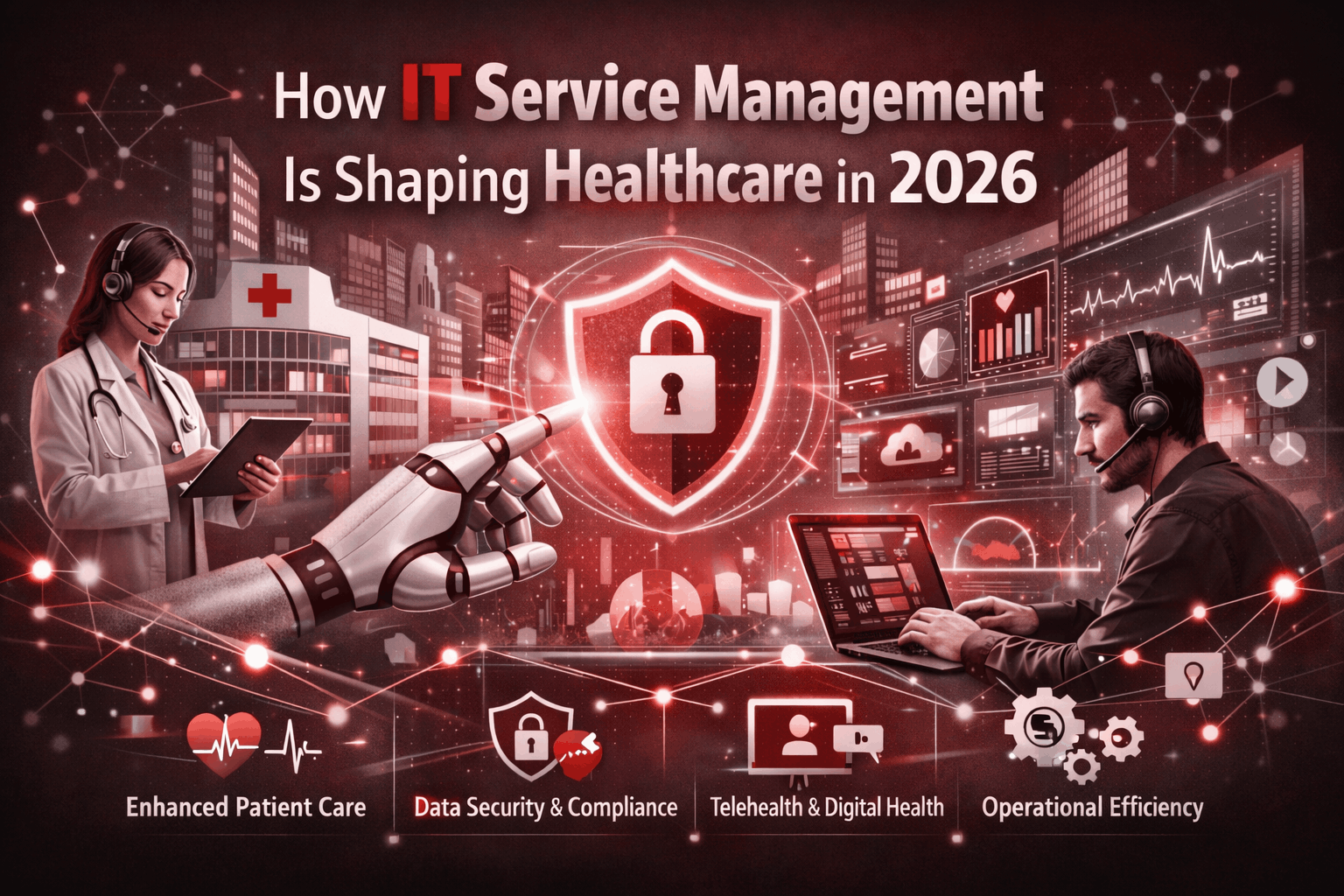
The healthcare industry is changing at a rapid pace than ever before. Along with increasing costs, regulations, and technical requirements, there is always a need for improvements in patient care. One of the most important factors is quietly changing the way healthcare organizations work on a daily basis. IT service management is one such factor.
IT support services have evolved from mere system maintenance and troubleshooting. Additionally, IT services Virginia have become a strategic foundation for data security, clinical efficacy, patient safety, and overall excellence. This blog provides best practices on healthcare IT service management to help improve the performance, security, and reliability of the medical field.
The overall focus of IT service management is to plan, deliver, and enhance technology services that contribute to achieving healthcare objectives. It is proactive and methodical in its approach and is much more than just technical support.
IT services involve looking for potential problems, monitoring, and resolving problems as they occur, rather than waiting for systems to fail. It also sets procedures for change management, incident handling, and request fulfillment.
This is a very important approach in the healthcare industry because even a small issue can impact the safety of patients and the quality of services.
The relationship between healthcare professionals and technology is facilitated by IT service in Houston. Employees can submit a request for assistance or access the solution to their problem without waiting for human support through the self-service portal. The request is automatically directed to the relevant teams and processed faster.
With this improved support system, the medical staff and administrative staff are able to focus more on their core work of caring for patients. When technology is no longer a barrier, morale in the organization improves.
IT Service Management is a significant component of security and compliance. With customized management. Moreover, IT services can enforce security policies, monitor changes to the system, and track access within the healthcare industry. Alerts also help in identifying unusual activity, thus preventing data breaches.
In this manner, health care facilities are able to ensure that they are within the bounds of the law by maintaining proper documentation. This is not only important for the safety of patients but also for the reputation of health care facilities.
IT service in Houston supports ensuring that telehealth is stable, secure, and user-friendly. This also helps to manage network performance, application availability, and user access.
IT service reliability creates trust among patients who depend on digital care services. This also helps healthcare businesses to reach more patients, as they will be able to serve patients who may have had issues accessing care due to various barriers.
Healthcare businesses are always faced with the issues of offering quality patient care while remaining financially stable. Inefficient processes, system errors, and problem-solving can increase costs.
IT support services can automate processes and eliminate the need for repetitive work. Additionally, data analysis points out where improvements are needed that can prevent system failures, which can be costly.
As healthcare organizations expand, their technology environments become more complex. New locations, services, and technology solutions must be integrated without impacting existing operations.
IT service management provides a structured framework for growth. Standardized processes make it easier to onboard new systems and users. Clear visibility into infrastructure performance allows leaders to plan upgrades and expansions with confidence.
IT service management indirectly benefits patient satisfaction by ensuring that all digital interfaces are working as expected. Appointment scheduling systems work well, patient portals are available, and communication systems provide updates.
When patients feel that their privacy and values
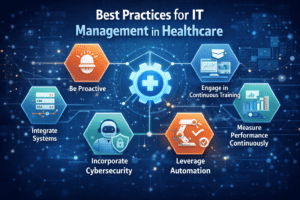
IT support service requires careful planning and following best practices. The following strategies can help healthcare organizations maximize the benefits of IT service management:
Be Proactive: Incorporate an automated approach to get the notification and address the error promptly without that error impacting the entire operations. However, waiting for the errors can cause the downfall and ultimately cost the patient care.
Integrate System Across the Organization: Ensure all the IT systems are working properly. From electronics devices to healthcare records. IT system integrations can reduce errors, improve workflow, and support doctors, nurses , and staff to provide reliable patient care.
Incorporate Cyber Security: Cyber security helps continue monitoring, threat detection, and automatically respond to systems. It also provides best practices to the staff and maintains compliance with HIPAA and other rules.
Measure Performance Continuously: IT support systems help to monitor performance while keeping the track record, and identify the areas of improvement that help to make data-driven decisions. Therefore, continued monitoring allows hospitals to adapt to the quick changes and demands.
Engage in Continuous Training: Due to the fast change in the IT industries, hospitals must ensure that healthcare staff are getting the current developmental training to stay up to date with the latest equipment, techniques, and compliance requirements.
Cultural Collaboration: Encourage communication between the clinical staff and IT teams to ensure the operation works seamlessly. Understand whether the current IT solutions align with the hospital staff and patient care, or need any improvement.Improve User Experience: Design the best IT system management that must be user-friendly for staff and patients as well. Such as easy portals, dashboards, and the overall system.
Best practices for IT management in health care include reliability, security, collaboration, and patient care. IT services Virginia have become an integral part of any organization, whether it’s a hospital or clinic. However, health care organizations that adopt these principles are better positioned to protect patient information, support health care professionals, and respond to the ever-changing health care environment. For those organizations that are seeking to make this transition, Doctor IT Service is there to offer the guidance and solutions that are required in order to effectively manage IT and ensure that the healthcare industry is running at its best.
Discover our most recent insights and updates from the world of IT
We've talked to a lot of small business owners in Charlottesville. Most of them have the same IT…
Read Article
Thursday morning turned into a rough one for ChatGPT users. Reports of the chatbot freezing up, refusing to…
Read Article
Every office runs on connections. Computers, printers, phones, cameras — they all need a way to talk. That…
Read Article