

Top 10 Best Outsourced IT Service Providers in Charlottesville
We've talked to a lot of small business owners in Charlottesville. Most of them have the same IT…
Read Article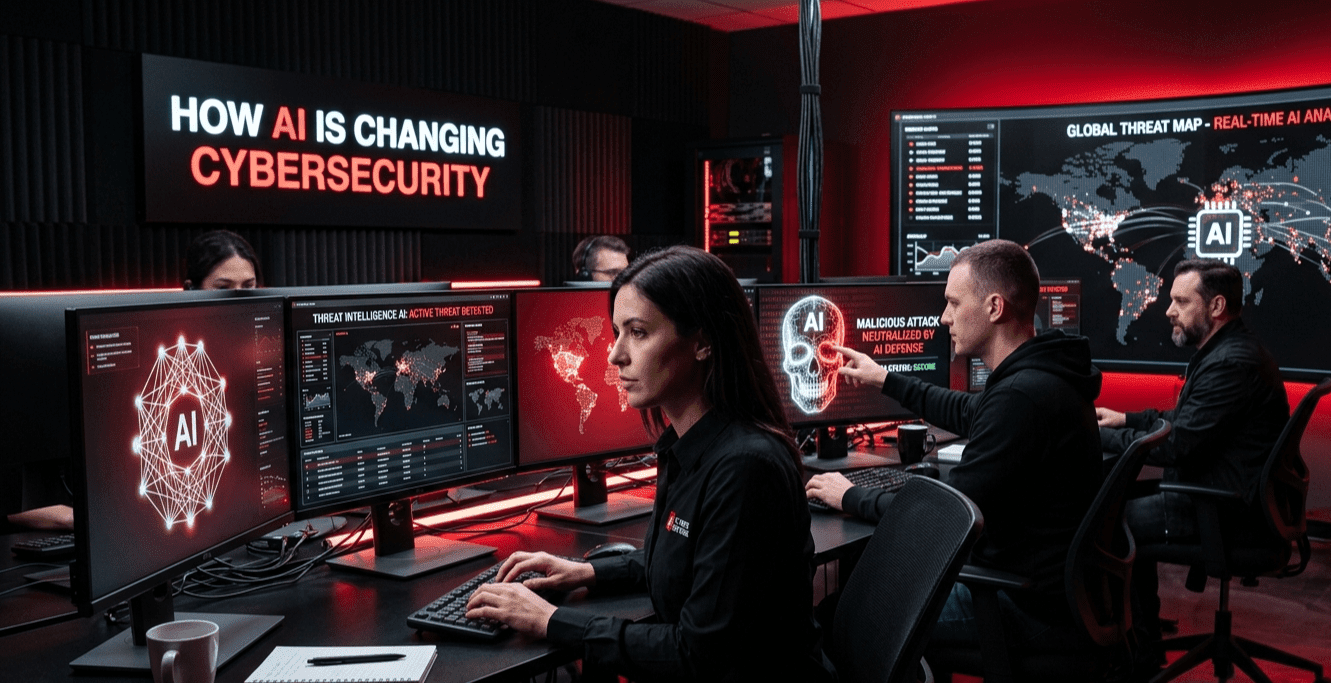
Let’s say this in a very simple way.
Most businesses don’t even think about cybersecurity until something actually goes wrong. And when it happens, it’s usually not a small issue. It’s emails getting hacked, systems locking up, or data just disappearing.
At the same point, there’s a lot going on around AI. People are talking about how ai is changing cybersecurity, but not everyone knows what that actually means in day-to-day business life.
Some think AI will solve everything. Others think it will replace jobs. But the reality is different.
So instead of making it difficult, let’s talk about it in a way that makes sense.
Here’s something people often ignore.
You can install the best security tools in the world, but if one person clicks the wrong email, that’s enough.
That’s why cybersecurity awareness best practices matter more than most people think. It’s not about fancy systems. It’s about basic understanding.
I’ve seen situations where companies had decent protection, but an employee clicked on something that looked harmless. That one click opened the door.
This is exactly why cybersecurity training for employees is important. Not once a year. Not just a presentation. It has to continue regularly.
If you’re thinking about improvement of cybersecurity awareness, the answer isn’t complicated. Just make it part of everyday work routine instead of ignoring it.
Now let’s talk about AI, but in a real sense.
The use of AI in cyber security is growing, yes. But it’s not magic. It doesn’t suddenly make everything secure.
What it does is, it helps.
Especially with things like machine learning in cybersecurity, systems can now notice patterns that humans might miss. Not because humans are unable to do, but because there’s too much data.
That’s where AI steps in.
And that’s basically what people mean when they talk about how ai is changing cybersecurity. It’s shifting things from reactive to a bit more proactive.
Let’s not overcomplicate this, and come to the point.
AI is mostly helping in areas like spotting unusual behavior and reacting faster.
For example, AI threat detection can notice when something doesn’t look normal. Maybe a login from a strange location, or activity at an odd time.
A human might miss that. AI probably won’t.
And no, it’s not perfect. But it’s fast.
Phishing emails were easy to spot. Broken English, weird links, obvious scams.
Not anymore.
Now they look real. Sometimes too real.
That’s why phishing detection with AI is becoming important. AI looks at patterns, tone, even small details that don’t quite match.
It’s not about catching everything. It’s about reducing chances of mistakes.
Same goes for malware.
Earlier, it took time to figure out what a suspicious file was doing. Now, with malware analysis AI, systems can quickly analyze behavior.
Again, it’s all about speed.
The faster you understand a threat, the better your chances of stopping it early.
There’s another side of this that people don’t talk about much.
Repetitive work.
Security teams do spend a lot of time checking logs, alerts and reports. It’s necessary, but it’s also time-consuming.
With security automation and SOC automation, a lot of that work is handled automatically.
It doesn’t replace people. It just takes some pressure off.
You’ll hear the term AI cyber defense quite often.
It sounds big, but the idea is simple.
Instead of waiting for an attack to fully happen, systems try to respond earlier. Block suspicious actions, flag unusual behavior, limit damage.
It’s more about being prepared than being surprised.
Even with all this technology, risks are still there.
And honestly, they’re increasing.
Common cyber attacks are not going anywhere. If anything, they’re getting smarter.
Phishing, malware, insider issues these things are still happening daily.
That’s why awareness still matters. Tools alone won’t fix everything.
People keep asking this.
Can cybersecurity be replaced by ai
Can ai replace cybersecurity
Short answer or long: both are no.
AI is useful, but it can’t think like a human exactly. It doesn’t understand context the same way as human. It doesn’t make strategic decisions.
It supports. It doesn’t replace.
Another concern is will cybersecurity jobs be replaced by ai.
This one is interesting.
Jobs aren’t disappearing. They’re changing.
People now need to understand tools along with security concepts. That’s where the future of cybersecurity jobs is heading.
So no, it’s not about losing jobs. It’s about adapting.
The idea of human vs AI cybersecurity doesn’t really make sense when you think about it.
It’s not a competition.
Humans are simply good at thinking, understanding situations and making decisions.
AI is good at speed and pattern recognition.
Put them together, and that’s where things actually work.
If you are curious that how to improve cybersecurity awareness, just keep things simple.
Do conversation with your team. Train them regularly. Make them aware of real risks.
A proper security awareness program doesn’t need to be complicated. It just needs to be consistent.
And yes, this training for them should not feel boring. If people don’t pay attention, it’s useless and won’t help.
Some cybersecurity awareness best practices are very basic, but they matter.
Nothing fancy. Just consistent.
Coming back to the main point, how ai is changing cybersecurity is mostly about making things faster and a bit smarter.
It helps in detection, response, and automation.
It doesn’t replace people. It supports them.
That’s the realistic thing.
AI is helpful, but it’s not totally perfect and reliable.
Yes, attackers are also using AI now.
So it’s not a one-sided advantage.
The future is not about AI taking over.
It’s all about collaboration between humans and machines.
The future of cybersecurity jobs will involve working with AI tools, you can’t avoid them.
AI is still not able to replace human intuition, ethics, or complex problem-solving. Can ai replace cybersecurity roles? No, but it will change them.
It is used for everything from AI threat detection to malware analysis AI and SOC automation. It acts as guard that never sleeps.
By using SOC automation, analysts no longer have to manually check every single “failed login” attempt. They can focus on the threats that need human logic and investigation.
It is one of the most stable and high-growth careers available. As long as we use technology, we will require people to protect it.
The biggest risk where hackers use the same tools we use to find holes in our defenses. We also face the risk of phishing detection with AI.
If you take one thing from this, let it be this.
Cybersecurity is not only about tools. It’s about awareness.
Understanding how ai is changing cybersecurity is useful, but relying only on it is not good decision.
You need people who understand risks. You need systems that support them.
That balance is what actually works.
Discover our most recent insights and updates from the world of IT
We've talked to a lot of small business owners in Charlottesville. Most of them have the same IT…
Read Article
Thursday morning turned into a rough one for ChatGPT users. Reports of the chatbot freezing up, refusing to…
Read Article
Every office runs on connections. Computers, printers, phones, cameras — they all need a way to talk. That…
Read Article